Nuffnang Ads

Followers

Thursday, 3 July 2014

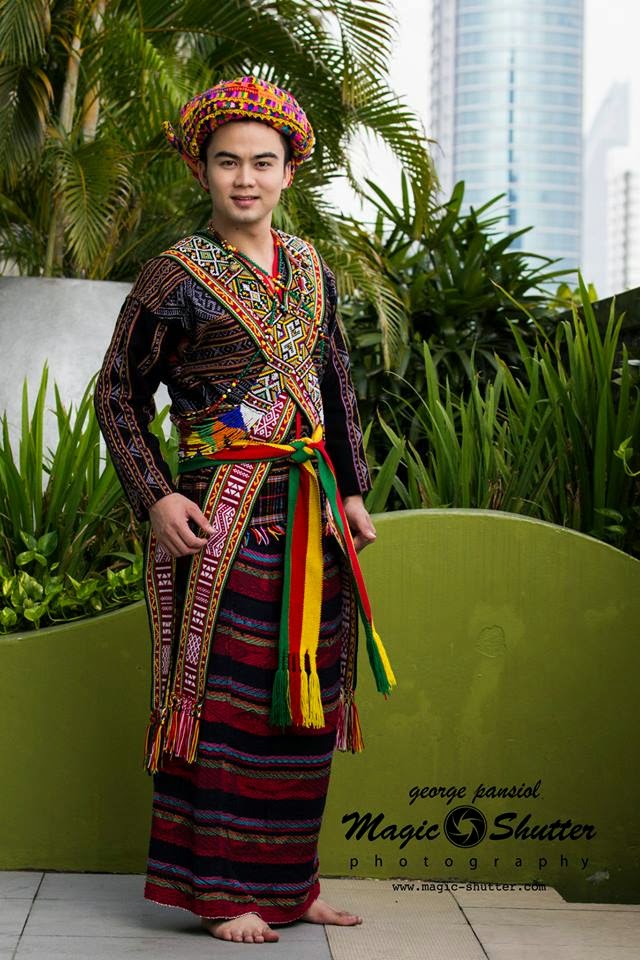
Mr. George Pansiol of Magic Shutter Photography


Let’s see who I can feature today as our Borneo friend….. 


 Let me introduce to you Mr. George Pansiol or fondly known as “Angkol George”. He is the official photographer for Borneo Hornbill Festival 2014 under the team called Magic Shutter. Magic Shutter is the collaboration between two brothers and a friend Desmond Pansiol and Harrisson. Mr. George hailing from Membakut Sabah is a Dusun Kuijau, one of the rare ethnics in Sabah.


Now back to photography….Mr.George has been doing photography for 5 years now and mainly cover wedding photography. He gets his inspiration from National Geographic because it features natural photos in minimalistic amount of editing. Here are some of his works together with Magic Shutter for you to see. 


Mr. George aspires Magic Shutter to be the Photographers of Peoples’ choice whereby good photography does not necessary burns a hole in your pocket. 

So there you have it…Mr. George Pansiol of Magic Shutter…interested? Do visit their Facebook page or website :Magic Shutter Photography


Wednesday, 2 July 2014

Borneo Hornbill Festival 2014 - Miss Sarawak Ethnic (Iban Category)

And so, Borneo Hornbill Festival closed its curtain for 2014 and the winner of Iban category has also been crowned. This year's winner was Ms. Nathalie Dinggai, an English teacher from Kapit, Sarawak. Beautiful and graceful in her own way, she managed to wow the jury with her confidence in public speaking apart from a good command in culture knowledge.  


Donning the heavy beaded Iban Batang Rajang ngepan with confidence, she managed to smile all the way throughout the competition. I was awed with her costume because she indeed "owned" the "look" and not the ngepan wearing her mostly because of her height and slim stature.


Nathalie in her ngepan Iban Batang Rajang


In her pua kumbu dress designed by her own


Top 3
Nathalie was top three in the finale of the Ms & Mr. Borneo Hornbill and I am very proud of her because she managed to keep the crowd amused with her jovial way of answering the finale question on tuak. 

In essence, Borneo Hornbill Festival is not only about the perfect costume because there is none. We are diverse in culture, geographically, economy and most importantly history, we revolved and evolved and keep evolving within the vast community of Borneo...

Borneo Hornbill Festival is about embracing one's culture to celebrate our differences and not to quarrel on who is the best. We are one, We are Borneo, We must stay united in order to achieve harmonious Borneo...

Dearest Alumni and all, always remember that no matter where you go or "bejalai" never forget our roots and be proud of it...Like what I always keep in my heart: "YOU CAN ALWAYS TAKE A SARAWAK GIRL OUT FROM SARAWAK BUT NEVER SARAWAK OUT OF A SARAWAK GIRL." OOOHHHHHHHAAAA......

Some of the still memories of Borneo Hornbill Festival 2014. Congratulations to all the winners, to me win or lose all of you are winners in my heart...Lots of love from me...Till then SEE YOU AT BORNEO HORNBILL FESTIVAL 2015!


Photos are from Magic Shutter & Facebook...

Sunday, 11 May 2014

Iban Contemporary Ethnic Fashion

I would like to dedicate this post to my mum in conjunction of Mother's Day and her being my inspiration in fashion. 

One of my fashion idols is definitely my mother. Looking through her old photos showed me that she is indeed a person who is always on trend when it comes to fashion without being a fashion victim. 

 I love her retro style the best particularly her long dark brown hair cascading over her shoulders and myriad styles of the 70s be it maxi dresses, bell bottom jeans, platform heels and big sunglasses with minimal or no make up at all. 
 
Whenever I see her old photos it gives me the inspiration to be be unique and individual in fashion and my particular favourite is Iban contemporary ethnic particularly from the Pua Kumbu be it it's fabric or the motif.

My very young mum

In our ngepan Iban


The love story began when I saw my mother more a sleeveless jacket and skirt made of an authentic pua kumbu as an usherette at an event in Sarawak and that was from a photo in the 70s. 


Mum's Pua Kumbu Jacket
When I was small I loved the jacket so much that I always wanted wear it but mum would not allow me as it was too big for me. As a result she made me my own pua kumbu jacket and skirt by using a pua kumbu motif fabric. See how young I was exposed to traditional motif fashion? Thank you Mummy!


I do not have my mother's photo of her wearing the jacket as it is not with me at the moment. However, because of this old jacket and the "mini" version of it inspired me to showcase Iban contemporary ethnic fashion in whatever events I attended. I wish I can be a good tailor as at the moment I can only design and send my designs to the tailor.

Here as some of my Iban contemporary ethnic looks that I have styled before. 


To a pre-Gawai dinner in 2014

Borneo Hornbill Festival 2013

At a friend's wedding

Same skirt in different style

At a book review session where I presented Sarawak related book review in MITI
My engagement in 2011
 
My first try in sewing a Pua Kumbu skirt which definitely needs a lot of improvement

My BHF photoshoot

My brother's convocation

Trying out some different looks for marek empang

I am so happy that now more and more designers are inspired to bring back the ethnic look and their effort should be commended. I hope to see more Sarawakian designers showcase more ethnic fashion not only for the runway but also easy to wear styles. 

Before I end my post for the day, I would like to give a shout out to all the mothers out there, Thank you for being the inspiration to your children particularly your daughters as my mother did and HAPPY MOTHER'S DAY!


Tuesday, 7 January 2014

Iban: Among the Expert Weavers of Borneo

I am sure that most of you out there would be aware that the Iban community is known for their skill in weaving pua kumbu. However, do you know that they too are exceptionally skilled in weaving mats and baskets? In the words of Florina H. Capistrano Baker (1998), Basketry means “containing life”, be it with non-basket, non-container articles such as hats or mats.
In the olden days weaving mats or baskets is one of the many skills that an Iban maiden would possess. A skilful weaver would have tattoos etched on their forearms just below the elbows as a symbol of a high ranking weaver just like of those who are skilful in producing pua kumbu. Usually, these expert weavers were mainly farmers.
Plaited articles back then were mainly produced for local needs i.e. for daily use like ‘bubu’ or fish traps, ‘selabit’ a carry all basket used by farmers, prestige or ritual purposes such as ‘garong’ used in Gawai Antu ceremony  and some even being traded or bartered away.  Other than having different kinds of materials used and functionality weaving also has their own particular motifs. The more intricate the motif the more skilful you are. Like pua kumbu not everybody is able to weave any kinds of motif as it is taboo to some weavers.
Raw materials can come in different sources, such as rattan, bamboo, pandanus, reeds (bemban) just to name a few. However, nowadays, there is a trend where the Iban weavers use nylon straps (tali ladat) to weave due to the scarcity of such natural raw materials.
Before I move on with my next article on weaving, please follow this link where my mother in law was featured in Borneo Post Online on weaving using tali ladat. *Note: The article is written in Iban by Christopher Bisop dated 5 January 2014.Tali ladat nyilih senggang enggau bemban


Monday, 5 August 2013

Tuak - A dying Art


"Tuak" is the what the Iban community name their alcoholic beverage made of fermented rice, yeast and sugar basically it is also referred to as rice wine. The beverage is a popular drink among the Ibans and other Dayaks of Sarawak during the Gawai festivals, weddings, hosting of guests and other special occasions. ‘Tuak’, ‘ Burak’, ‘ Montaku’, ‘ Sake’, ‘ Berem’ or rice wine is actually drank by most community in Borneo and the world generally but having different names and base ingredients.

Tuak is a dying art. Why?

There is no proper exposure as to really promote Tuak to the world. The only commercial tuak that I know is the “Royalist”.

Thank you for a proactive initiative done by Mr. Agustus Sapen under the Persatuan Warisan Sarawak Kuala Lumpur for organising the Tuak Education and Appreciation Session recently at Leonardo’s , Jalan Bangkung, Bangsar, Kuala Lumpur. Truly it was and event to be commended because it managed to bring people particularly from the Peninsular Malaysia to know more about the dying art of making Tuak.

The crowd was reasonably large considering the size of the cosy event venue and I can see that Agustus managed to educate the crowd on how Tuak is made, including myself (perhaps I should be making a batch too!). Participants had a great time by sampling myriad range of Tuak from different Tuak makers from Sarawak and also rice wine from other parts of the world.

Tuak making should be revived because it is an art; an art which requires immense skill to make a great Tuak. One of a community’s value is known through its skill in certain art, so why not make Iban community be known as the Tuak Master, master in making it that is. Make a name for yourself, and this is a wake up call for other Borneo community as well because you too have your special brew and distinct characteristics of your rice wine.

                                      Going to the venue


At the venue, Leonardo's
 
 
With Mr. Agustus Sapen
 
One happy face, Mr Francis Kanyan
 
More happy faces


Yes I agree that Tuak making process is a tedious one but with proper education and hygiene guidelines I am sure that Tuak will make its way like Merlot, Cabernet Sauvignon, Shiraz, Rose of the foreign land.